
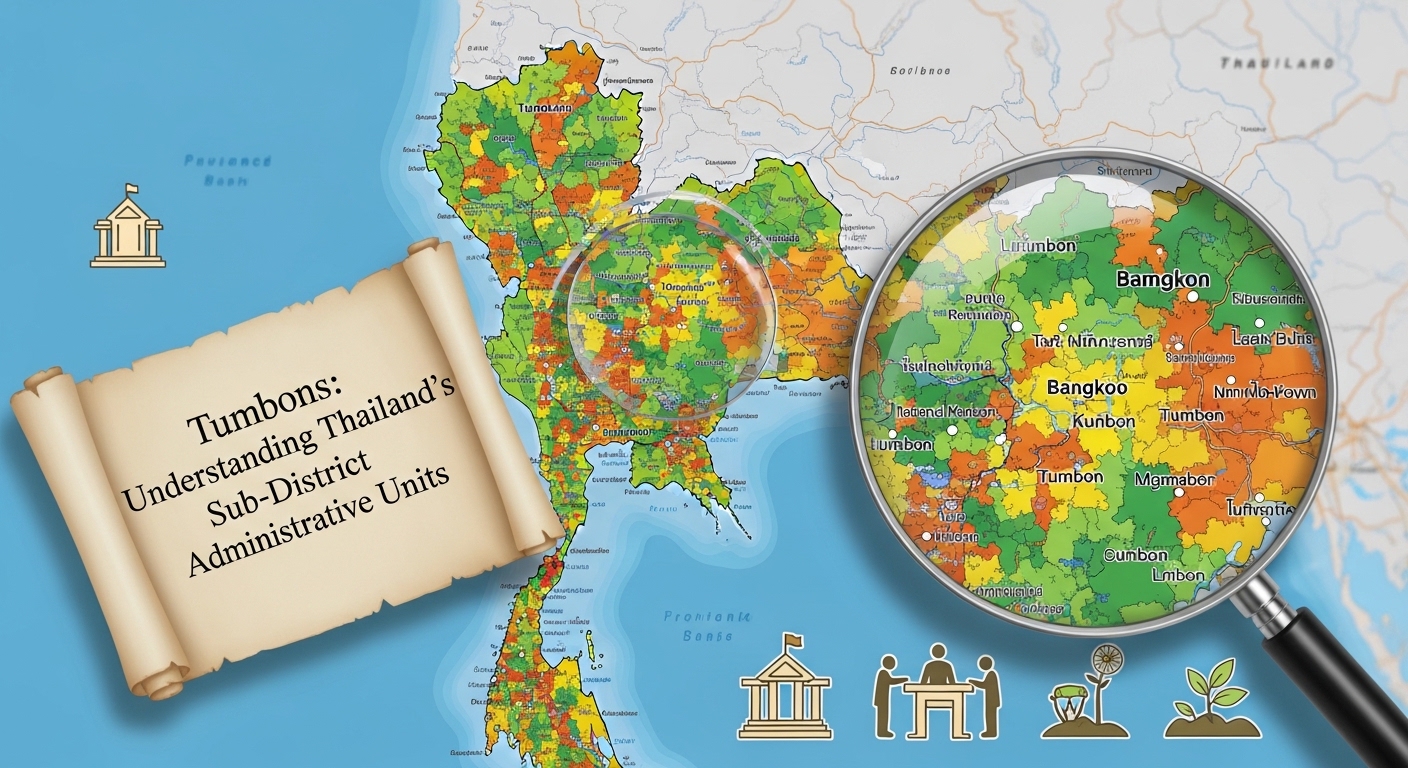
When exploring the vibrant tapestry of Thailand, one might stumble upon a term that seems to echo through local governance: Tumbons. These small administrative units play a crucial role in shaping communities across the country. But what exactly are Tumbons, and why do they matter? From their historical roots to their modern-day significance, understanding Tumbons opens up a fascinating window into how Thai society operates at the grassroots level. Join us as we dive deep into this essential aspect of Thailand’s administrative landscape!
History and Evolution of Tumbons
Tumbons have a rich history rooted in Thailand’s administrative evolution. Originating during the early Rattanakosin period, these sub-district units were established to enhance local governance and improve community engagement.
Originally called “muban,” which means village, they underwent significant reforms in the late 20th century. This transformation aimed to create a more streamlined and efficient local government structure.



As Thailand modernized, tumbons began to play crucial roles beyond mere administrative functions. They became vital hubs for cultural preservation and local development initiatives.
The 1997 Constitution further empowered tumbon administrations by granting them autonomy. This shift allowed communities to take charge of their own affairs while fostering grassroots democracy.
Today, tumbons represent an essential link between citizens and the broader governmental framework. Their evolution reflects Thailand’s commitment to decentralization and local empowerment across diverse regions.
Role and Functions of Tumbons in Local Governance
Tumbons serve as the backbone of local governance in Thailand. They are the smallest administrative units, playing a crucial role in connecting citizens with government services.
Each tumbon is responsible for managing community needs. This includes overseeing public health initiatives, education, and infrastructure projects. The local administration makes decisions that reflect the unique character of each area.
They also act as a bridge between residents and higher levels of government. Tumbon leaders advocate for their communities, voicing concerns and securing resources needed for development.
Additionally, tumbons facilitate civic engagement by encouraging residents to participate in decision-making processes. Citizens can attend meetings where they discuss issues affecting their daily lives.
This localized approach fosters a sense of belonging among community members while ensuring that governance is responsive to specific regional challenges.
Characteristics of Tumbons
Tumbons serve as the grassroots of Thailand’s administrative structure. Each Tumbon typically encompasses several villages, creating a tight-knit community framework.
One defining characteristic is their local governance system. Residents elect a headman and council members, ensuring that decisions reflect the needs of the community. This democratic process strengthens civic engagement among citizens.
Culturally, Tumbons are rich in tradition and diversity. They often celebrate unique festivals and events that highlight local customs and history. These gatherings foster unity and pride among residents.
Economically, each Tumbon contributes to regional development through small-scale agriculture or local businesses. The focus on sustainability helps maintain traditional practices while adapting to modern demands.
The size varies too; some are densely populated urban areas while others are rural with vast agricultural lands. This spectrum adds depth to Thailand’s socio-economic landscape, showcasing the versatility inherent within these sub-districts.
Understanding the Structure and Hierarchy of Tumbons
Tumbons operate within a structured framework that reflects Thailand’s decentralized governance. Each tumbon serves as an administrative unit, often encompassing several villages or communities.
At the helm of each tumbon is a headman, known as the “Phu Yai Ban.” This individual plays a crucial role in local decision-making and community representation. The headman works alongside elected members who form the Tumbon Administrative Organization (TAO).
This organization consists of representatives from various sectors, ensuring diverse voices contribute to policy development. Their tasks include managing local resources and handling community projects.
In addition to these officials, there are also committees focusing on specific areas such as health or education. These groups ensure that all aspects of community life are addressed effectively.
The hierarchy fosters collaboration among residents while empowering them to actively participate in their government’s functions.
Challenges Faced by Tumbon Administrators
Tumbon administrators encounter various challenges in their daily operations. Limited resources often hinder their ability to implement effective programs. Financial constraints can restrict development projects that directly benefit the community.
Another significant issue is communication. Many residents may not fully understand local government initiatives or how to engage with them. This gap creates barriers, making it difficult for leaders to gather input and foster participation.
Additionally, political pressures can complicate decision-making processes. Administrators must navigate local politics while trying to prioritize the needs of citizens.
Cultural diversity within tumbons presents another layer of complexity. Different groups may have varying priorities and perspectives, requiring sensitive handling from leaders who strive for inclusivity.
Rapid urbanization poses a challenge as populations shift and grow unpredictably, demanding adaptive management strategies that are often hard to formulate quickly enough.
The Importance of Tumbons in Thai Society
Tumbons play a pivotal role in the fabric of Thai society. These sub-districts serve as essential units for local governance, bridging the gap between residents and higher levels of administration. They provide a platform for community engagement, ensuring that citizens have a voice in decision-making processes.
In rural areas, tumbons often become the heartbeat of communities. They foster social cohesion by bringing people together through local events and initiatives. This sense of belonging is crucial in maintaining cultural traditions and promoting shared values among diverse populations.
Moreover, tumbons are instrumental in implementing development projects tailored to specific needs. Whether it’s improving infrastructure or enhancing educational opportunities, these administrative units can respond effectively to local challenges due to their intimate understanding of community dynamics.
The economic impact cannot be overlooked either; tumbon administrations facilitate entrepreneurship by supporting small businesses and agriculture within their jurisdictions. Their efforts contribute significantly to regional economic growth while preserving local identities.
The significance of tumbons extends beyond mere governance structure. They embody Thailand’s commitment to grassroots democracy and resilience—a testament to how localized management can empower citizens and enrich societal harmony.